
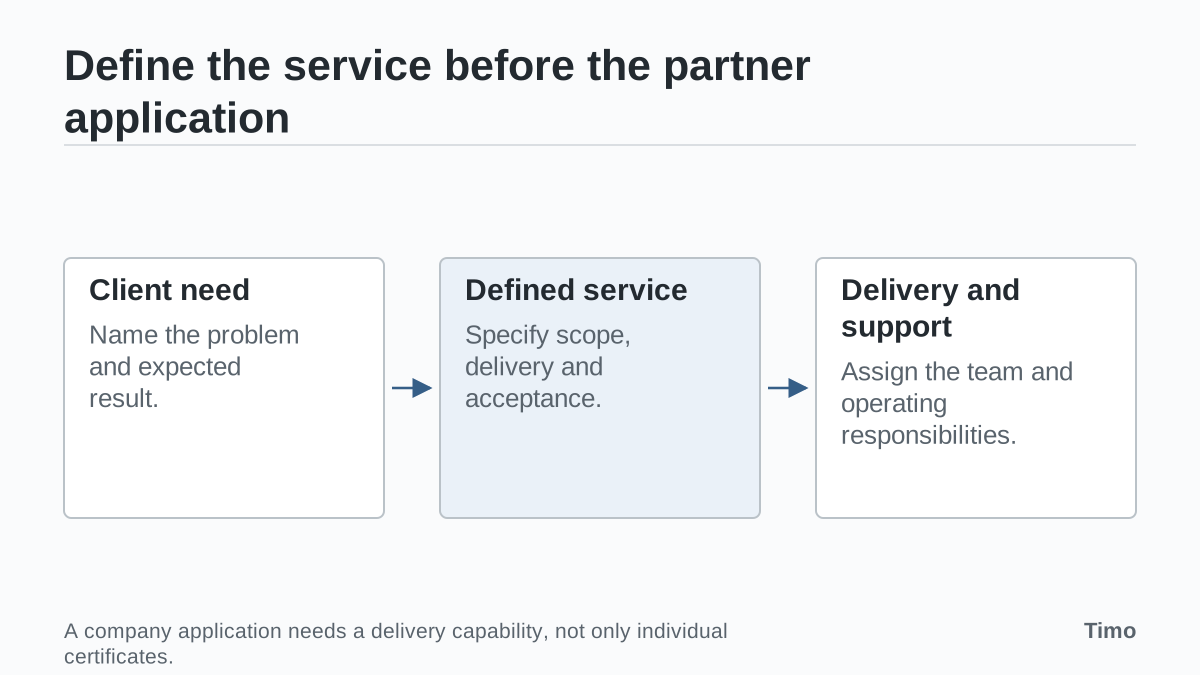
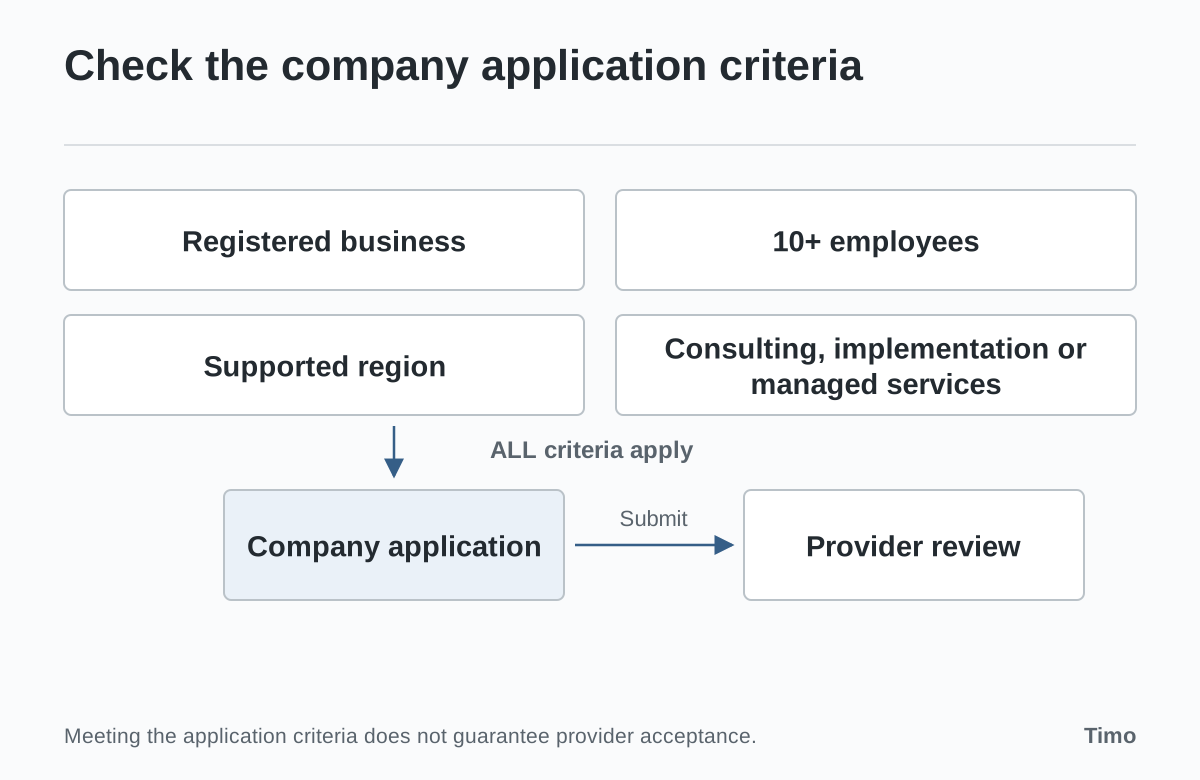
A consultancy should consider the Claude Partner Network when it has a business reason to help customers adopt Claude and a team that can deliver that work. The current public application criteria call for a registered business with at least 10 employees, operating in a supported region and providing consulting, implementation or managed services. Meeting those conditions allows the company to consider applying; Anthropic still decides whether to accept it.
For a smaller services firm, the next question is practical: what would the company do with the relationship? A useful answer names the customers it intends to serve, the problem it will solve and the people who will deliver and support the solution. Preparing that answer is worthwhile even before the application, because it exposes gaps in the firm's own service plan.
This guide separates Anthropic's published conditions from suggested preparation work. The examples and readiness steps below are planning advice for consultancies, not an official acceptance formula.
Check the company criteria before preparing the case
Anthropic's Claude Partner Network announcement describes a programme for organisations bringing Claude into customer work, including consulting and professional services firms. The current organisational application gives a more specific first screen: registered business status, 10 or more employees, a supported region and a consulting, implementation or managed-services offer.
The business model matters. Consulting helps a customer decide what to do; implementation builds or introduces the solution; managed services take responsibility for some part of its continued operation. A consultancy may offer more than one of these, but it should be able to explain what a customer actually buys and where the firm's responsibility ends.
The application directs product companies toward the Claude API route. If your company primarily sells a software product, do not assume that its use of Claude makes it a services partner. If the company also has a substantial services business, describe the structure accurately and use Anthropic's official route for any eligibility interpretation.
Define a service a customer can understand
Consider an illustrative 12-person consultancy that already helps regional retailers improve their support operations. The team wants to use Claude in customer-service workflows. “We build AI agents” describes a technology category, but it does not tell a customer what will be delivered or help the firm estimate the work.
A more useful description would be: “We help retail support teams draft order responses from approved policies and customer records. Our implementation covers the information connections, response testing, human approval points and support handover.” The description identifies a buyer, a workflow and a delivery responsibility.
It also gives the consultancy a way to limit the first engagement. The initial service might prepare draft responses for staff review while leaving shipment changes and refunds outside the scope. That boundary reduces the number of actions the team must design and validate at once, and it makes acceptance easier to discuss with the customer.
This example is not a claim about a real firm's results. It shows how a focused offer can make the application preparation and the commercial conversation more concrete.
Show how the work reaches a usable customer outcome
A prototype can demonstrate that Claude produces a plausible answer. A customer implementation requires more: the answer needs to use the right information, fit the business process and have an owner after launch. Your readiness material should explain how the team closes that gap.
For the retail consultancy, discovery begins with sample support requests and the policies staff currently use. The team needs to learn which questions occur often, where staff search for answers and which actions require permission. That information shapes the scope before developers build a connection to the order system.
The implementation then needs evaluation: a set of representative cases checked against explicit expectations. Include ordinary requests and cases where the information is missing, contradictory or outside policy. A polished demonstration with only successful examples cannot show whether the workflow handles those conditions.
Finally, explain the handover. Who maintains the policy material? Who receives a failure report? What will the consultancy continue to support, and what becomes the customer's responsibility? These answers help show that the proposed service extends beyond a demonstration into work the customer can actually operate.
Prepare evidence that explains the team's capability
Organise a small set of material around the claims you need to support. You do not need a large presentation full of product names. You need enough detail that another person can understand what the firm can deliver and how it knows.
| Claim the consultancy wants to make | Evidence that would help another person assess it |
|---|---|
| We understand the customer's problem | A description of the current workflow, its recurring difficulties and the person responsible for improving it |
| We can design and implement a solution | A reference design or working sample, with the choices and limitations explained |
| We can judge whether it is ready | Representative evaluation cases, expected behaviour and a record of issues corrected |
| We can deliver responsibly | Defined data access, review responsibilities, change controls and a customer handover |
| We can sustain a services practice | A named sponsor, delivery lead, relevant team and realistic way to find and support customers |
If customer work is confidential, use permissioned summaries or an internal reference implementation with fictional data. Be explicit about which it is. An internal example can show a method, but it should not be presented as a deployed customer success or evidence of business outcomes that have not been measured.
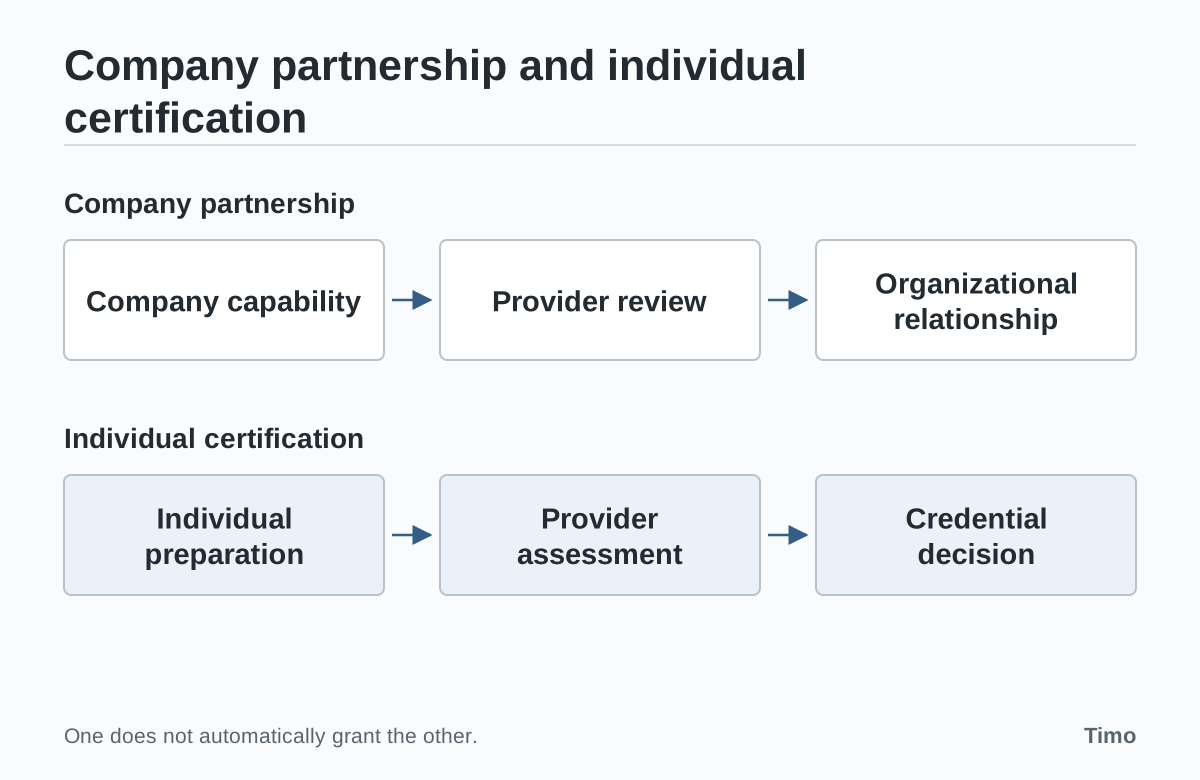
Certifications can contribute to the capability picture by showing that particular people met a provider's assessment requirements. They sit alongside implementation and operating evidence. The firm still needs to explain how those people work together to deliver a complete engagement.
Connect company membership with individual learning
The partner application belongs to the company. It concerns the organisation's services, team and ability to work with customers. An individual Claude certification belongs to the person who satisfies the provider's requirements. The two processes can support each other, but one does not award the other status.
Your team can begin individual learning while the company prepares its partner application. Amotion AI runs Timo and is a registered Claude Partner Network member. Timo offers Claude learning, assessments and mock practice for people developing certification knowledge and AI consulting skills. Team members can apply individually and review the resources and provider-access arrangements offered for their roles before payment.
In the retail consultancy, the person responsible for business-output review may pursue Associate Foundations. Developers may focus on Developer Foundations, while people making system or enterprise design decisions examine the relevant architect track. A team learning plan should follow those responsibilities rather than assign the same credential to everyone simply because it is the most familiar name.
The partner relationship also needs an owner. Someone must maintain company information, coordinate relevant learning and connect programme resources with real delivery work. Without that ownership, joining a network can become an administrative achievement that changes little about what the team can offer customers.
Make the first 90 days useful
Anthropic describes partner training, technical support and market-development resources in its partner programme information. The exact resources and access available to an organisation follow its current programme terms. Your internal plan should explain how you would use relevant support if accepted.
For the illustrative consultancy, the first two weeks could establish the support-workflow offer, executive sponsor and delivery lead. The team would collect example requests and agree on the initial scope. The result should be a service description that sales and delivery both understand.
Over the next month, practitioners could complete relevant learning and build a reference workflow using fictional orders. The important output is a tested example with documented limitations and a repeatable evaluation method, not merely a record of courses attended.
The following month could apply that method to a qualified customer discovery exercise or improve the internal reference if no suitable customer is ready. The team should identify what would be needed for a real implementation: access approvals, policy ownership, integration work and acceptance responsibilities.
By the end of the period, leadership can review the evidence and decide whether the offer is ready to sell more widely or needs further work. This is an illustrative internal plan. It does not promise partner acceptance, programme onboarding or a customer deployment within 90 days.
If the firm does not meet the current threshold
A consultancy with fewer than 10 employees does not meet the employee threshold stated on the current public application. If your organisation has an unusual structure and needs clarification, ask Anthropic through the official route rather than inventing an interpretation of “employee.”
There is still useful work to do. Develop a focused service, learn from public Claude materials and build a reference example whose behaviour you can explain and test. Those activities can improve the business regardless of the timing of a future partner application.
Individual team members can use Timo's learning and certification-preparation route while the firm develops its services practice. The guide for applicants without a partner employer explains the application process. Current membership costs US$50 for two months, with the available resources confirmed before payment and delivered by email after enrollment. Provider exam fees are separate.
Timo's portal, public profiles and project discovery are not yet available. Your consultancy needs its own acceptance from Anthropic to claim partner membership; individual Timo enrollment does not confer that status.
When your company meets the current published criteria and can explain the practice it intends to build, use the official Claude Partner Network application. Keep published eligibility, your internal readiness judgment and Anthropic's final decision distinct throughout the process.
Frequently asked questions
Can a small consultancy join the Claude Partner Network?
The current public application calls for a registered business with at least 10 employees, operating in a supported region and offering consulting, implementation or managed services. A smaller consultancy that meets those conditions can consider applying. Anthropic decides admission after review.
Can a solo consultant apply through the same company route?
A solo consultant does not meet the stated 10-employee threshold. Public learning and individual preparation support can still be useful. If a particular business structure needs interpretation, seek clarification from Anthropic instead of treating an individual enrollment as company partner status.
Must every employee already have a Claude certification?
The public criteria reviewed for this guide do not state that every employee must be certified before application. A sensible internal plan identifies which people need which capabilities and how the team will develop them. Anthropic may provide additional requirements through its current programme process.
Is partner membership free?
Anthropic's March 2026 launch announcement described organisational membership as free. Check the current programme terms before relying on that historical statement for a budget decision. The company's own training, staffing and delivery work also require resources regardless of a programme fee.
Does a strong readiness plan guarantee acceptance?
No. The evidence and planning suggestions here help a consultancy explain and improve its services practice. They are not Anthropic's published scoring model and cannot predict an application decision.
How can Timo help our team while we apply to the Claude Partner Network?
Team members can apply individually to Timo for Claude learning, assessments and mock practice matched to their responsibilities. Amotion AI runs Timo and is a registered Claude Partner Network member. Through Timo, your team can develop its Claude skills while the company prepares its own partner application. Use the profile review to confirm current resources and provider-access arrangements before payment. Your company still needs Anthropic's own partner acceptance, and Anthropic controls individual credential awards. Apply through Timo with your target track and learning goal.