
OpenAI PartnerU supports learning through organizations in the OpenAI Partner Network. Amotion AI runs Timo and is an OpenAI Select Partner, giving individuals a route to pursue available OpenAI partner learning through Timo membership. Apply with your professional profile and learning goal; Timo confirms the courses, learner-account requirements and access arrangements available to you before payment.
As an individual, you apply to learn through Timo using Amotion AI’s existing partner relationship. Your application can focus on the OpenAI skills, relevant badges or certification preparation you want to pursue and how they support your move toward AI consulting. OpenAI makes the company-level Partner Network decision and controls eligibility and awards for its credentials.
A company application and a learner application have different purposes
The OpenAI Partner Network is designed for organizations that build, sell and deliver OpenAI solutions. When a company applies, it describes its technical expertise, capabilities and customer experience. OpenAI reviews the application and decides whether the company enters the network. Accepted partners receive onboarding, enablement and evolving resources for their teams.
In this setting, enablement means helping the partner's people develop the knowledge and practices needed to work with OpenAI solutions. PartnerU forms part of that learning environment. The public company application is therefore different from a personal request to study a course: the company is being assessed for a business relationship, while the learner is seeking access through one that already exists.
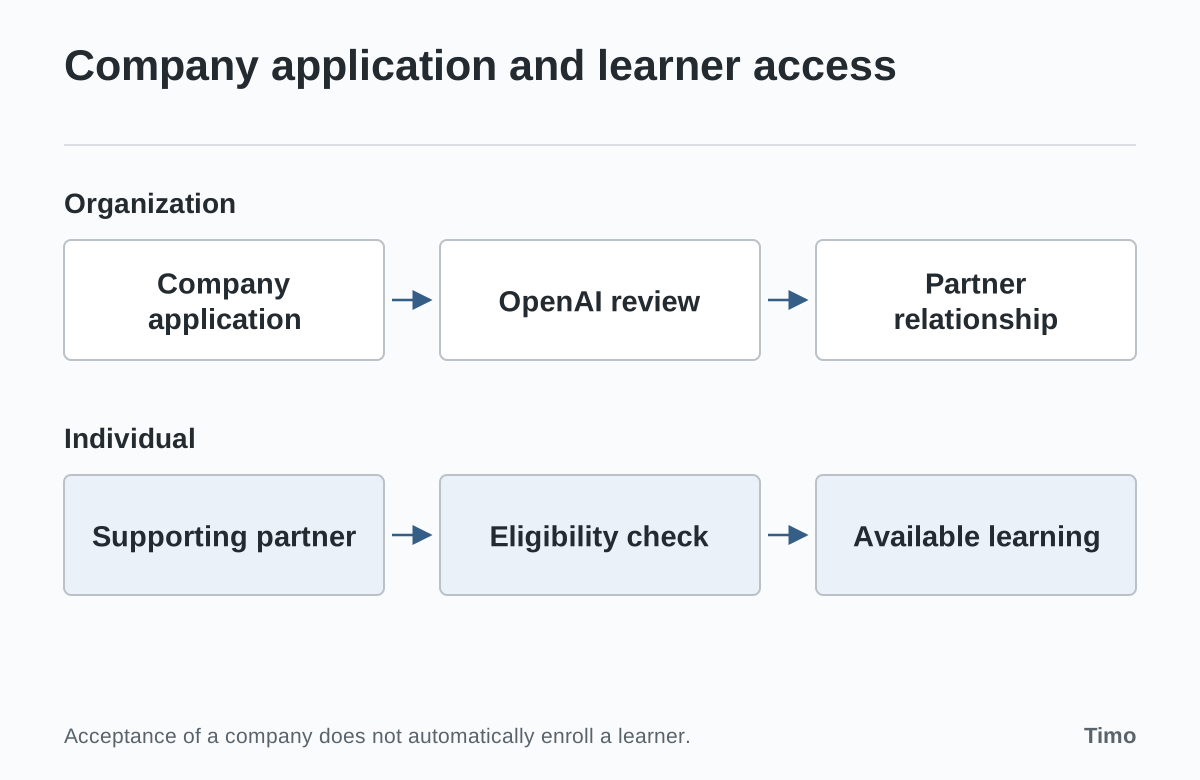
If you work for an accepted partner, start with its partner or learning lead. Independent professionals can apply through Timo, whose operator, Amotion AI, is already an OpenAI Select Partner. This provides an individual learning route through an existing partner; your application is for learning, while Partner Network membership remains an organizational status.
There are other ways to start learning while you clarify this. OpenAI Academy is the public route, and OpenAI Certified currently has its own invited-workspace requirements. The OpenAI learning guide for individuals compares those alternatives. Keeping them separate makes it easier to identify exactly which route an organization is offering you.
Ask for details that connect the offer to your actual enrollment
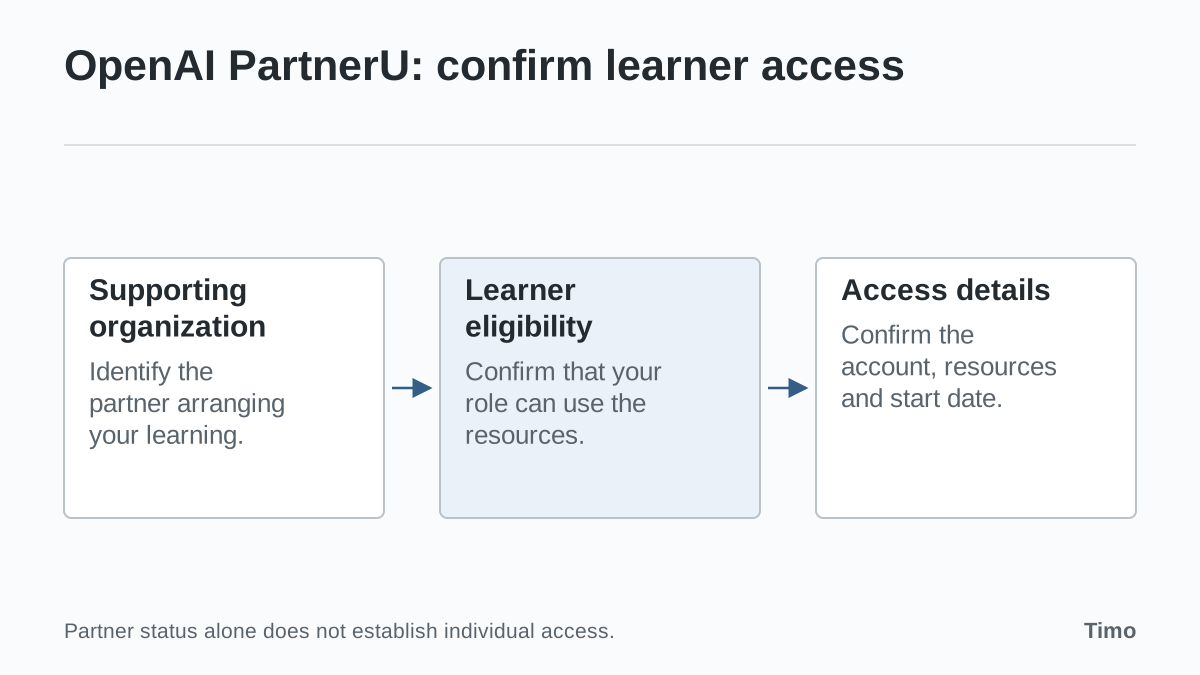
A partner logo tells you about an organizational relationship. It does not tell you which course your account will be able to open, when onboarding will occur or which organization issues a resulting badge. You need those details to decide whether the learning meets your need.
Start by asking for the exact learning resource. An answer such as “OpenAI training” could refer to several arrangements. The organization should identify the relevant PartnerU resource, ChatGPT or Codex course, or separate learning track, and explain what is available now. If access to one item depends on a later decision, that dependency belongs in the offer.
Next, confirm learner eligibility and identity. Ask whether the route supports your role and whether it requires a particular email address or account. Do this before creating accounts or beginning a course, because you want the organization to associate your enrollment with the correct person. If you have already used another email, ask how the discrepancy should be handled rather than assuming records can be transferred.
Then clarify the outcome and its issuer. A supporting organization can provide its own assessments, tests or badges alongside provider learning. That does not make those outcomes interchangeable. Request the exact name of the completion record or badge, who issues it, and what you must complete to earn it.
Finally, obtain the delivery arrangement and timing. Ask whether you will receive instructions by email, use an existing learning site or wait for a specific access step. The answer should distinguish resources that can be provided after enrollment from anything still awaiting provider confirmation. If a paid item has uncertain availability, also read the terms that explain what happens if it cannot be provided as described.
A freelance finance analyst’s learning goal
Suppose a finance analyst wants to learn how to use ChatGPT to prepare monthly variance commentary, which explains differences between planned and actual financial results. She already understands the source figures, but wants a better way to organize them, draft explanations and identify statements that the evidence does not support.
Her application can describe that task in ordinary language: she will use a fictional budget-versus-actual table, prepare draft commentary and check every numerical claim. She will also test a month in which the source shows a cost increase but gives no explanation for it. The intended skill is to preserve that uncertainty and ask for the missing explanation, rather than invent a business cause.
This gives the supporting organization something concrete to assess. It can consider whether the available learning resources address the analyst's needs. The analyst, in turn, can ask whether the offered course and assessment actually help with that work. The example does not improve her eligibility automatically; it improves the information on which the application and purchase decision can be based.
A brief application needs only a few connected details: your current role, the task you want to perform, the sample you intend to build and how you will check the result. A professional reference such as a LinkedIn profile or CV gives the reviewer context about your experience.
How the Timo application proceeds
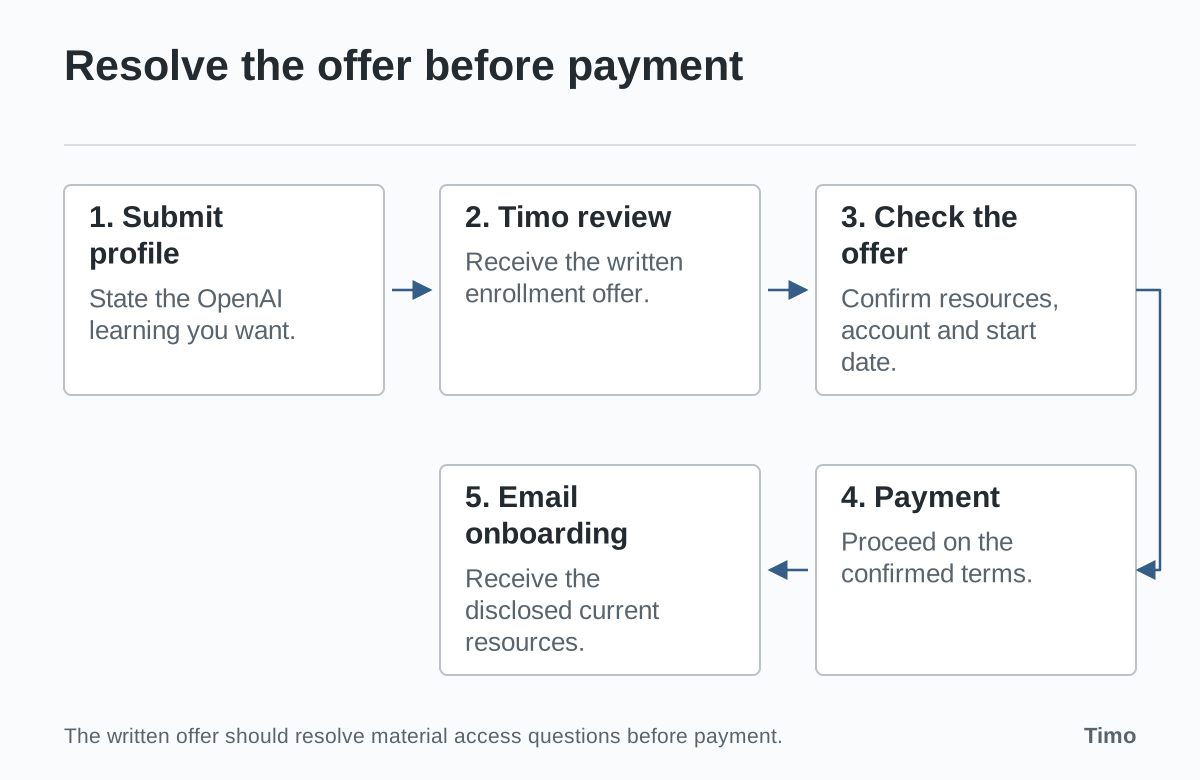
Apply to Timo for OpenAI partner learning. Amotion AI runs Timo as an OpenAI Select Partner, and Timo reviews individual applications for the available learning tracks, assessments, tests and badges. The steps below explain how your learning goal becomes an enrollment with named resources and access arrangements.
Submit your profile and OpenAI learning goal
Use the application form to provide your name, email and a professional reference such as LinkedIn, a CV or GitHub. Select the OpenAI Practitioner route where a track choice is available. Describe what you want to learn using a specific task like the finance example, so the review can consider your intended use.
Wait for the profile review and written offer
Timo reviews the application before sending payment details. An accepted application should lead to written enrollment information covering the agreement, price, available resources, access method and current dates. Read these together; an application being approved and a provider resource being available are separate facts.
Confirm provider learning before payment
If PartnerU is the reason you are applying, have the enrollment details identify the currently available courses or badges and the learner-account requirement. Ask for any unresolved access dependency to be made explicit. This is the point at which a general interest in partner learning should become a clear understanding of what the offer includes.
Complete payment and follow email onboarding
Membership currently costs US$50 for two months. After payment, Timo delivers current resources and onboarding instructions by email. Available OpenAI learning sits alongside Timo assessments, tests and badges according to the enrollment disclosure. Follow the account instructions supplied for the resources you are receiving.
Timo's portal, public profiles and project discovery are not yet available under the current public disclosure. Plan around the email delivery and access dates provided in the offer. OpenAI retains control of its own learning eligibility, access and credential decisions.
Use the learning to produce something another person can review
Once you have access, return to the task that motivated the application. For the fictional finance analyst, completing the learning should be followed by a sample containing the input table, her instructions, the first commentary, the errors she found and the reviewed result. That lets her explain what she learned through a concrete piece of work.
The ChatGPT learning path without coding shows how to develop and test such a workflow. Learning, assessment and a work sample each contribute different information about your skills. None should be presented as an automatic promise of a provider credential or client project.
Frequently asked questions
Can an individual sign up for OpenAI PartnerU directly?
Individuals can apply through Timo, run by Amotion AI, an OpenAI Select Partner, for the available partner learning route. Timo confirms the specific PartnerU resources and learner requirements during enrollment. The public Partner Network application is for companies seeking to become partners.
Do I need a company email for PartnerU?
Confirm the account requirement with the organization supporting your enrollment. Do not create or change accounts on the assumption that every partner-supported route uses the same rule.
Does ChatGPT Plus include PartnerU access?
The public OpenAI guidance does not establish Plus as a PartnerU access route. A personal subscription and an organization's partner learning arrangements are separate, so ask the supporting organization to confirm your eligibility.
Is Amotion AI an OpenAI partner?
Yes. Amotion AI is an OpenAI Select Partner and runs Timo. Through Timo, individuals can pursue available OpenAI learning, relevant badge and certification preparation, and practical assessments to develop skills for AI consulting.
How does Timo help an individual access OpenAI partner learning?
Timo uses Amotion AI's OpenAI Select Partner relationship to support an individual learning route. Apply with your professional profile and the skills you want to develop. Timo reviews your application, identifies the available courses and resources before payment, then provides current resources and onboarding instructions by email. Membership is US$50 for two months; OpenAI controls eligibility and awards for its credentials.
What should I resolve before paying for a partner-supported route?
Resolve the exact resource, learner account, current availability, delivery method, access date and issuer of each outcome. Read the applicable terms, including what happens if a paid resource cannot be supplied as described.