
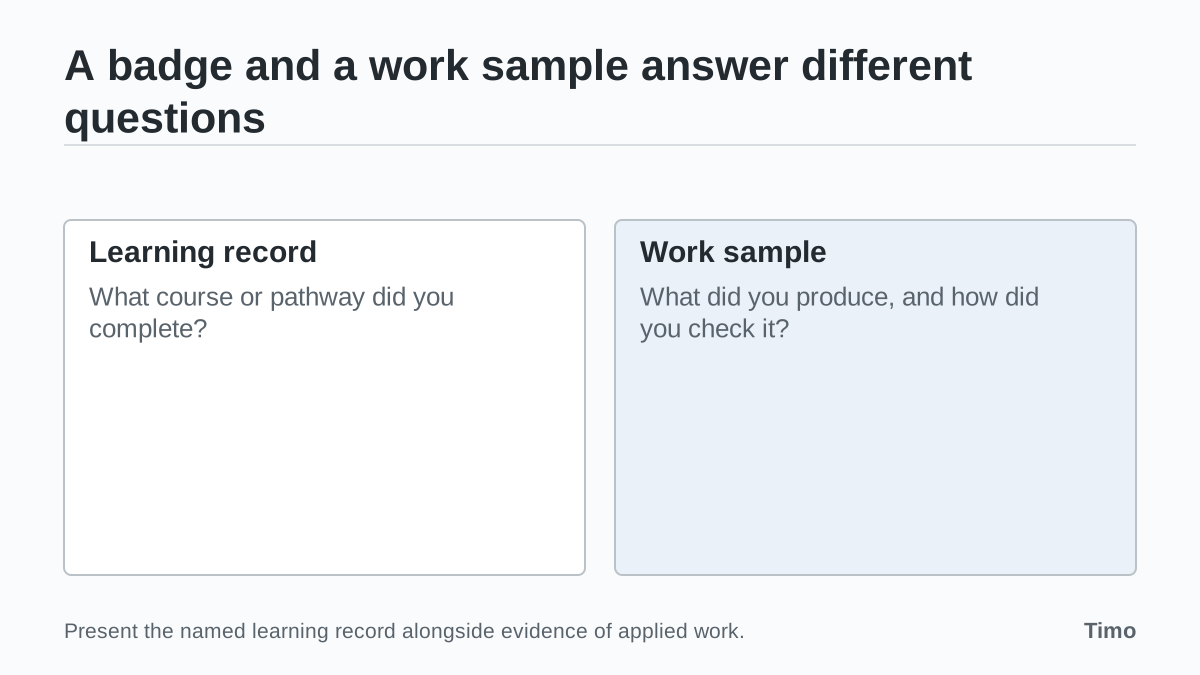
An OpenAI Academy badge records that you completed a course and passed its assessment. A work portfolio gives a manager or client another way to assess your learning: they can inspect the task you attempted, the result ChatGPT produced and the checks you performed before accepting it. Presenting the two together makes your contribution easier to understand.
You can begin with a fictional project that uses a skill from the course. Keep it small enough that a reviewer can follow the complete example. A carefully explained sample of policy answers can demonstrate how you set instructions, find unsupported claims and decide when someone must resolve a question.
Choose one capability that the sample will demonstrate
Start with a course objective that you can turn into visible work. If you studied prompting, demonstrate how you describe a task and supply relevant context. If you studied repeatable workflows, show what happens from input preparation through review and approval. If you studied evaluation, show how you decide whether an answer is acceptable and how you respond when it fails.
OpenAI Academy's catalogue includes workplace, development, leadership and education courses. The portfolio should match the particular learning you completed. A software-development sample may need code changes and tests; a workplace example can demonstrate useful judgment through documents and review notes.
If your goal is AI consulting, Amotion AI runs Timo and is an OpenAI Select Partner. Through Timo, individuals can pursue available OpenAI learning tracks and relevant badge and certification preparation alongside Timo assessments, tests and badges. Pair that learning with a work sample such as the project below so a prospective client can see both what you studied and how you apply it.
Write one sentence defining the claim your sample will support. For the exercise here, that sentence is: “I can design and review a ChatGPT workflow that drafts answers from a supplied policy and identifies questions the policy cannot resolve.” That is narrow enough to test and clear enough for someone else to challenge.
Build a fictional policy-answer project
Assume an operations team receives repeated employee questions about travel expenses. The team wants help drafting answers from its approved policy, but a responsible person must still handle exceptions and approval decisions. Your role in the exercise is to define the drafting task, test its output and explain the conditions under which the team could use it.
Create a short fictional policy and label it as practice material. Give its sections numbers so a reviewer can locate a rule. Include a few ordinary conditions, such as a meal limit, a receipt requirement and a named role responsible for considering exceptions. You are creating the rules for this exercise, not advising readers about any employer's actual policy.
Prepare twelve employee questions. Eight can be answered from the policy when the relevant conditions are supplied. Four should contain a gap or exception the policy does not fully resolve. Keep the expected reasoning for each question beside it in your review sheet. This gives you a basis for judging the answers before you see what ChatGPT writes.
The output format should ask for an answer, the supporting policy section, missing information and any question that needs to go to the designated human owner. Explain in the instruction that ChatGPT is drafting from the supplied policy and has no authority to approve an expense or create an exception.
Show one question all the way through review
For an illustrative rule, suppose section 3 of your fictional policy allows reimbursement up to US$40 per day for eligible meals with receipts. Section 6 says the operations manager reviews exceptions, but it does not specify whether a lost receipt qualifies. Those amounts and section numbers are invented for this exercise.
One employee question says: “I spent US$35 on a meal during approved travel, but I lost the receipt. Can I claim it?” An unsupported draft might answer that the expense is reimbursable because it falls below US$40. The numerical comparison is correct, but the answer ignores the receipt condition and makes an approval decision the source does not authorize.
A better answer would explain that the amount is within the stated limit while the normal receipt requirement has not been met. It would cite section 3 for the rule, refer the exception question to the operations manager under section 6 and state that the policy does not establish whether this particular claim can be approved.
That explanation matters because it shows precisely where the first answer failed. The problem was not an arithmetic error or poor writing. The draft treated one satisfied condition as if it satisfied every condition. Your review must check all relevant requirements before accepting the conclusion.
Retain six parts of the work sample
A finished answer alone cannot show how you reached it. Keep the material that lets a reviewer compare the first attempt with the evidence and understand the revision.
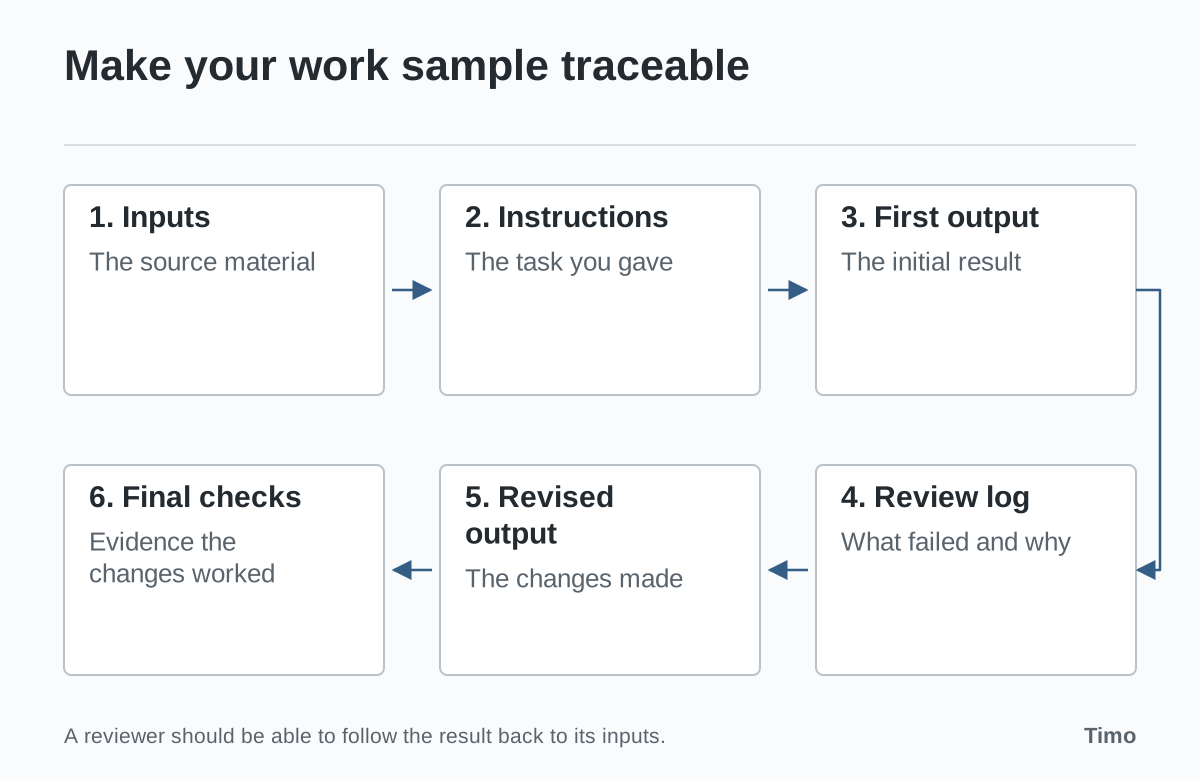
The six parts have different jobs:
- Inputs contain the fictional policy and twelve questions. They establish what information was available when the answers were produced.
- Instructions record the task, required response format and limits. They show what you asked ChatGPT to do with the material.
- First output preserves the original answers. A reviewer needs to see the actual starting point to assess the changes you made.
- Review log records each material error, the evidence that revealed it and why it mattered. It should distinguish a wrong answer from a source that simply lacks information.
- Revised output contains the answers produced after you changed the instruction or corrected an input. Keep the revised instruction with it so the change is reproducible.
- Final checks record the cases you reviewed again, unresolved failures and your recommendation about use. They explain what your sample establishes and what remains untested.
These can be sections of one document or clearly named files in a folder. The format matters less than the reviewer's ability to find a particular question, inspect both answers and understand the reason for your decision.
Define the review criteria before running the questions
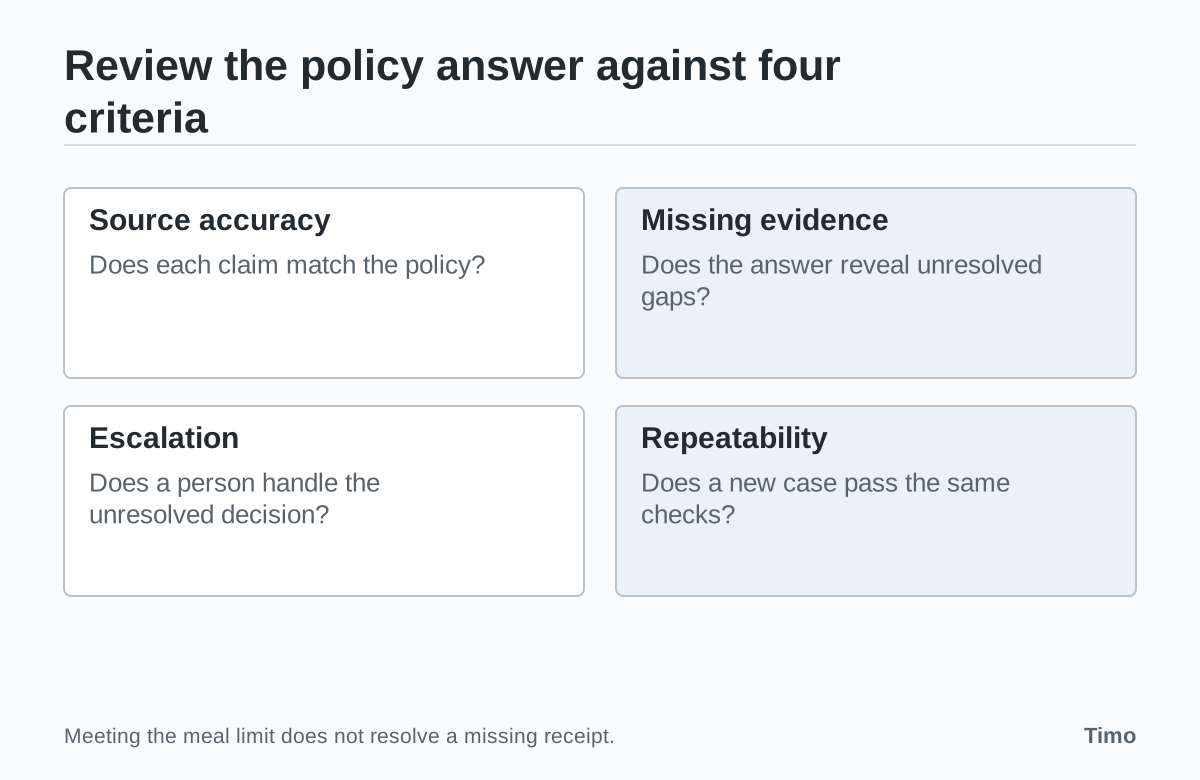
An evaluation rubric is a set of criteria used to judge outputs consistently. For this exercise, use criteria that connect directly to the problems the workflow must handle. Record a finding and evidence for each answer rather than assigning an impressive-looking score without explanation.
| Criterion | What the reviewer inspects | When the answer needs revision |
|---|---|---|
| Source accuracy | The rule, conditions and cited section supporting the conclusion. | The answer invents a rule, drops a condition or cites a section that does not support it. |
| Missing evidence | The facts needed to answer the question and whether they were supplied. | The answer fills a gap with an assumption or hides information it still needs. |
| Escalation | Whether an exception is sent to the person designated in the fictional policy. | The draft approves the case itself, chooses an unsupported owner or fails to explain the question for that owner. |
| Repeatability | How the same instruction handles related questions and changed conditions. | The workflow handles one phrasing correctly but gives an unsupported answer when a relevant detail changes. |
Clarity matters across these checks. An answer should be understandable to the employee, but simplifying it must not erase a condition or uncertainty. The lost-receipt answer needs both the familiar rule and the explanation of why someone must review the exception.
Set an acceptance rule before testing. For example, require every answer to be supported by the fictional policy, make missing facts explicit and keep approval decisions with the designated person. If a required condition fails, mark that case as needing revision. This prevents a polished answer from passing because unrelated strengths conceal a material error.
Revise the cause of an error and test it again
For the lost-receipt failure, a useful instruction change would tell ChatGPT to check every applicable condition before stating that an expense meets the policy. It should also say that an amount within a limit does not establish receipt compliance or approval of an exception.
Run the original question again, then use a variation: the employee now has a receipt but the amount exceeds the fictional limit. This changes which condition is unmet. The review should show whether the workflow actually checks conditions or has merely learned to react to the words “lost receipt.”
Retest the ordinary questions too. An instruction that sends every question to the operations manager would avoid some unsupported approvals, but it would fail the useful drafting task for questions the policy clearly answers. Record both kinds of failure so your recommendation reflects what the process can actually do.
Explain your contribution and the limits of the sample
Begin the portfolio with a short introduction stating that it is a fictional exercise, which skill it demonstrates and where the reviewer can find the six parts. After completing the work, describe only the actions you actually performed. If you designed twelve questions but tested only six, make that difference visible.
Your final recommendation should follow the results. If routine answers pass while exceptions still fail, explain that exceptions need additional work and human review. Do not describe the workflow as ready for unattended use because a small sample produced some correct responses. You have demonstrated a method on selected cases, not proven how an entire organization will operate it.
Use the exact badge title beside the sample. OpenAI states that Academy badges and pathway certificates of completion are not certifications. Accurate labeling lets a reviewer separate your course record from your original practical work without diminishing either.
Apply to Timo with your professional profile and the skills you want to develop for consulting. Membership costs US$50 for two months and includes the available learning tracks, assessments, tests and Timo badges confirmed during enrollment. Profiles are reviewed before payment, and current resources are delivered by email. Keep developing your portfolio alongside the learning so you can show the work you personally completed and reviewed.
Frequently asked questions
What should I build after earning an OpenAI Academy badge?
Choose one course skill and a small task that makes it visible. Keep the inputs, first result and review together so someone else can assess your method as well as the final answer.
Do I need a real client project?
No. A clearly labeled fictional project can demonstrate how you scope work and check results. Avoid implying that the sample was commissioned by a client or used in production.
How many projects should I include?
Begin with one complete example. Add another when it demonstrates a different capability. Several unexplained outputs provide less useful evidence than a project whose decisions a reviewer can follow.
Should I show failed answers?
Yes, when they help explain your judgment. Show the original error, the source that contradicted it, your correction and the retest. Remove information you are not authorized to share.
Can I call myself OpenAI certified after earning an Academy badge?
No. Use the exact Academy badge or completion-certificate name. The portfolio demonstrates your own application of learning; it does not change the provider's credential label.
How can another person review the sample quickly?
Give them a short index and direct them to one representative question. They should be able to compare its source, first answer, review finding, revised answer and final conclusion without needing your verbal explanation.
How can Timo help me turn an OpenAI badge into evidence of consulting skills?
Amotion AI runs Timo and is an OpenAI Select Partner. Timo membership supports your learning and assessment path with available OpenAI tracks, relevant badge and certification preparation, and Timo assessments, tests and badges. Apply that learning to a reviewed work sample and present the exact learning records beside it. This gives a prospective client concrete evidence to assess; selection for consulting work depends on your fit with the project.