
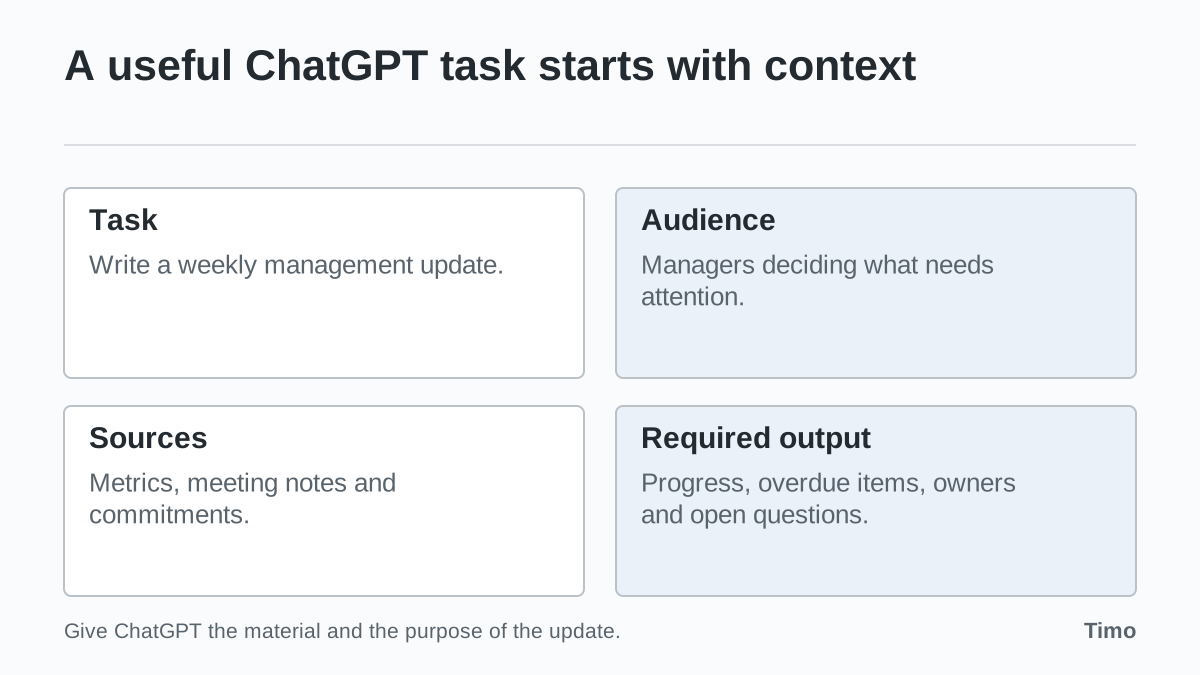
You can learn useful ChatGPT skills without writing code by completing a task whose result you know how to check. Choose familiar source material, describe the output you need, review the first draft against the sources and improve the instructions where the draft fails. Repeating that process teaches you how to use ChatGPT within a complete piece of work.
A weekly management update is a useful first exercise for analysts, project managers and operations professionals. The task involves several connected skills: selecting relevant information, preserving figures, distinguishing decisions from suggestions and making missing details visible. These are skills you can practise through ordinary written instructions.
Choose a task with a result you can verify
A learning goal such as “get better at AI” offers little guidance when you sit down to practise. A more useful goal is to produce a one-page update in which every figure matches the source, every confirmed decision has evidence and every action has an owner and date or an explicit gap.
This gives you a finish line and a way to judge the result. If ChatGPT produces a fluent paragraph with the wrong completion count, the task has failed one of its checks even if the writing sounds confident. You can then investigate what information or instruction needs to change.
Choose a task you understand well enough to make that judgment. Meeting actions, customer-feedback summaries and reviews against a supplied requirements list can also work. For a first public example, use fictional material that you can share with a reviewer. Keep the scope small enough that you can personally inspect every important claim.
Build four capabilities in one exercise
A prompt is the instruction you give ChatGPT. Context is the supporting information it needs to carry out that instruction, including source documents, definitions and constraints. A workflow is the larger sequence that brings the inputs, drafting, review and final approval together.
Those distinctions help you diagnose problems. If a completion count is missing from the source, adding more adjectives to the prompt will not supply it. If the source is clear but the draft ignores it, the instruction or review process needs attention. If the draft is accurate but nobody approves its use, the workflow is still incomplete.
| Learning stage | What you practise | What you retain |
|---|---|---|
| Define the assignment | Explain the audience, source material and required output. | A written instruction another person can understand. |
| Ground the draft in the sources | Require claims to be traceable to the supplied material. | The first draft with references or source labels. |
| Review and improve | Find factual errors, unsupported conclusions and missing details. | A review log and a revised instruction. |
| Repeat with changed inputs | Check that the method still works when the data changes. | A second reviewed example and notes on remaining limitations. |
OpenAI Academy's course catalogue provides a useful learning companion. AI Foundations covers prompting, context and responsible use, while Applied AI Foundations develops repeatable workflows and review points. The courses are free through a ChatGPT account. Use the lessons to improve your example as you work, so each concept has an immediate application.
For an organized learning path with practical assessments, Amotion AI runs Timo and is an OpenAI Select Partner. Timo membership gives individuals access to available OpenAI learning tracks, Timo assessments, tests and badges. You can use the learning alongside an exercise such as this weekly update to develop ChatGPT skills for your current role or a move toward AI consulting.
Prepare three sources for a fictional weekly update
Assume you manage a small customer-success team and need to brief its operations director. The director wants to understand performance, unresolved issues, confirmed decisions, next actions and where leadership help is required. You have three short documents:
- A metrics table records this week's service activity and the measures the team tracks.
- Meeting notes record discussions, decisions and concerns raised by colleagues.
- A commitments list records promised actions, their owners, due dates and current status.
For this illustrative exercise, the commitments list contains 20 items: 18 are complete and two are overdue. One overdue item has no named owner. These figures are fictional learning data, not a report of a real team or Timo performance.
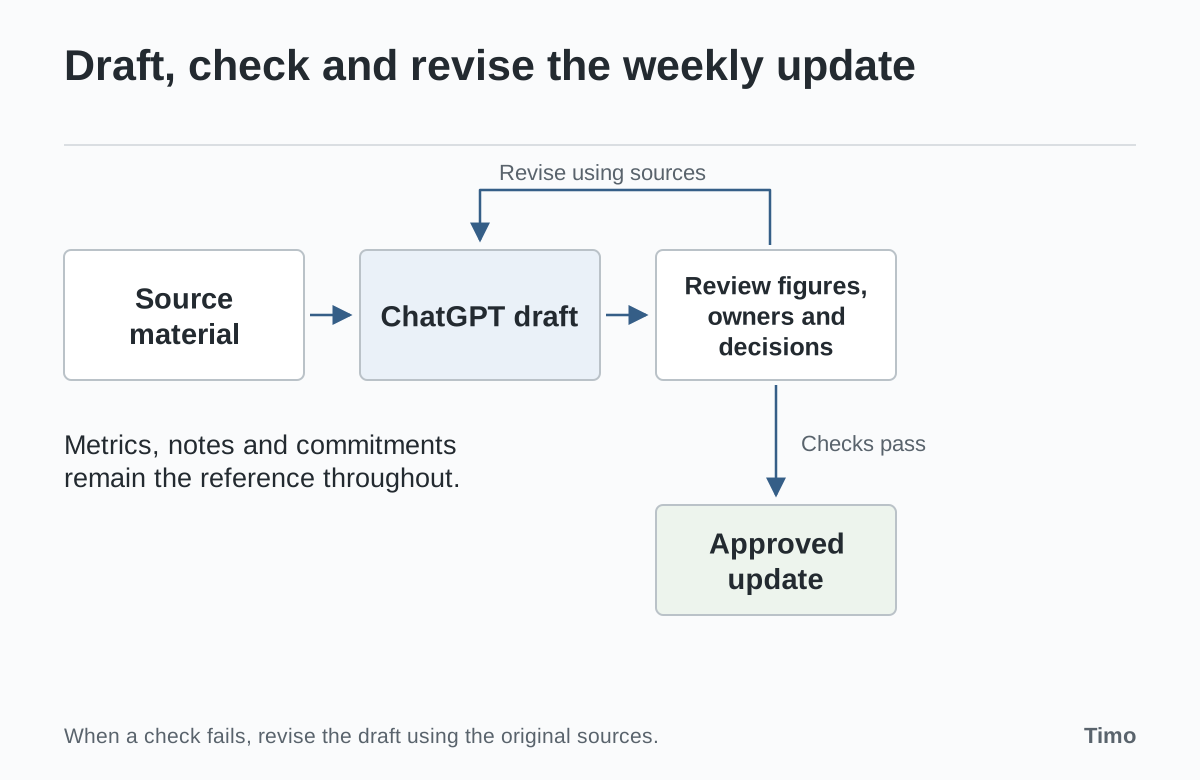
Give each document a clear title and date. If you use source labels such as A, B and C, retain the same labels in your review notes. The purpose is to let you find the evidence behind a statement without guessing which document ChatGPT used.
Give ChatGPT an assignment that explains the required judgment
A useful instruction says what the reader needs and how to handle information that is incomplete. For this example, you could use:
Draft a one-page weekly update for the operations director using only the supplied metrics, meeting notes and commitments list. Use sections for performance, issues, confirmed decisions, next actions and leadership help required. Preserve the source figures. For each decision or action, identify its source. If an owner, date or explanation is missing, say what is missing and request confirmation. Treat suggestions in the meeting notes as suggestions unless the notes explicitly record an agreed decision. Do not describe an overdue item as complete.
Then supply the three labeled sources. You can use short text extracts for this exercise; the learning method does not depend on connecting live systems or writing software.
The instruction explains several distinctions that matter to the director. An observation about a delay is not an agreed explanation of its cause. A proposed next step is not a commitment someone has accepted. Asking ChatGPT to retain those distinctions gives you specific things to inspect when the draft arrives.
Review a concrete error before improving the wording
Suppose the first draft says: “The team completed all commitments this week.” That sentence is clear English, but it contradicts the fictional commitments list. The important correction is factual: 18 of 20 items are complete, two remain overdue, and ownership is missing for one of them.
A corrected update could say:
The team completed 18 of 20 commitments. Two commitments remain overdue. One overdue item has no named owner in the commitments list, so ownership needs confirmation before the next action can be assigned reliably.
This version preserves the known count and the unresolved issue. It does not choose an owner or invent a reason for the delay. The reviewer can ask the team to confirm the missing owner, then update the report when that answer is available.
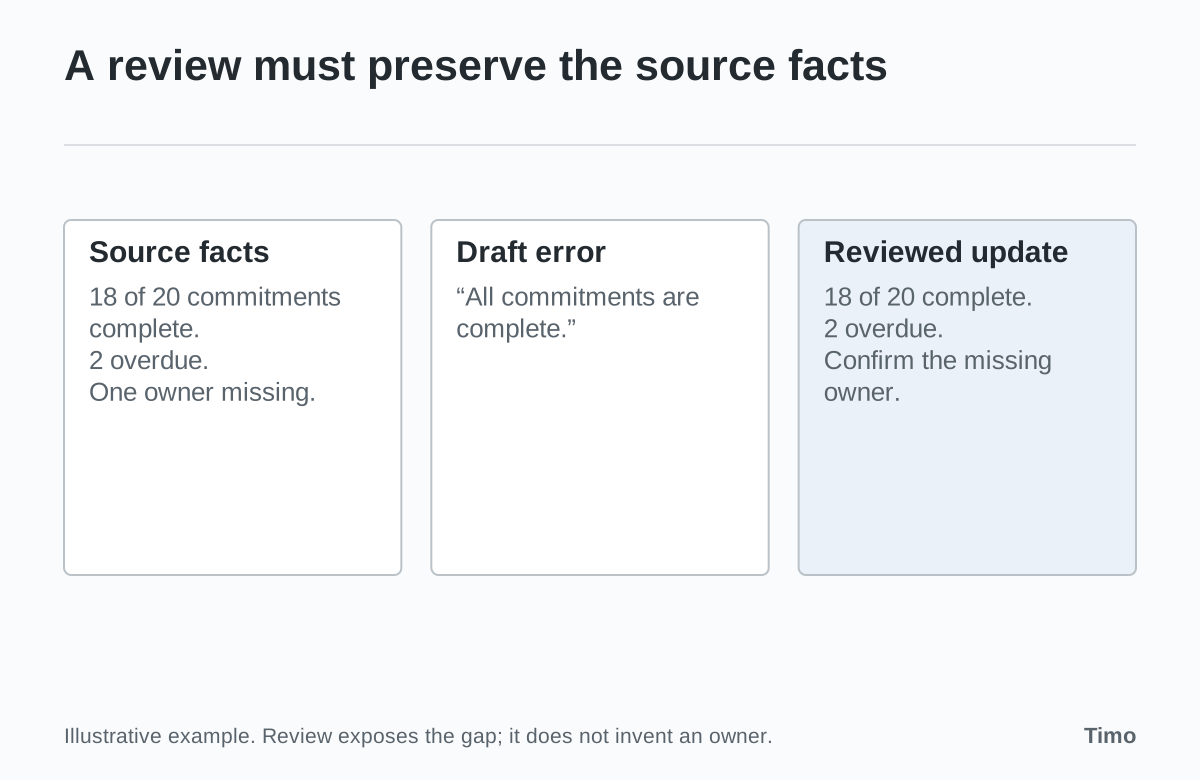
Record the error and its correction before rewriting the draft for style. A simple review log can contain the draft statement, the source evidence, why the difference matters and the change made. In this case, describing everything as complete would hide unfinished work from the director. That consequence explains why checking status matters more than making the paragraph sound polished.
Check the whole update, including what it leaves out
Review each number against its source, then inspect the decisions and actions. A statement can be misleading through omission even when the figures it includes are correct. An update that mentions 18 completed commitments but silently drops the two overdue items would still give the director an incomplete picture.
For each action, confirm that the person and date appear in the supplied material. If either is absent, retain the gap in the draft until someone with responsibility confirms it. Check that concerns remain concerns and that the report does not convert an opinion in the meeting notes into an established cause.
Only after those checks should you tighten the writing to the required length. If one page cannot hold a material issue and its needed context, shorten supporting detail first or flag the length tradeoff. A presentation limit should not silently remove information the director needs for a decision.
Test the method when the source is difficult
Once the normal example works, deliberately change one input at a time. Remove a due date from an action and check whether the new draft identifies the omission. Introduce two different values for the same metric and see whether the draft preserves the disagreement and names both sources. Add a colleague's theory about a delay without supporting evidence and check whether it remains an attributed concern.
These are controlled tests, meaning you know which difficulty you introduced and what a responsible answer should do. They reveal whether the workflow can make a problem visible. They do not establish that every future output will be correct.
When a test fails, revise the instruction to address the actual mistake. For conflicting values, add that ChatGPT should report both values with their source labels and ask for confirmation, unless you have supplied an explicit rule identifying the authoritative source. Run the difficult case again, then rerun an ordinary case to check that the correction has not damaged a useful part of the output.
Save a complete example and repeat it
Keep the fictional inputs, your instruction, the first output, the review log, the revised output and the final checks together. A reader should be able to follow one claim from source to draft to correction. The work-portfolio guide explains how to present this record without requiring a large application.
Then try a second week's fictional material using the same output structure. Compare what still requires your judgment with what the instruction now handles more consistently. This is a useful point to choose the next skill: perhaps comparing periods, handling a more complex decision log or adapting the process for another audience.
To continue developing these skills, apply to Timo and describe the work you want to improve with ChatGPT. Membership costs US$50 for two months, with available OpenAI learning tracks and Timo assessments, tests and badges confirmed during enrollment. Profiles are reviewed before payment, and current resources are delivered by email. You can begin the fictional weekly-update exercise now and use it to apply what you learn.
Frequently asked questions
Can I learn ChatGPT without coding experience?
Yes. This exercise uses written instructions, source material and human review. Coding becomes relevant when your chosen task requires software development or connections to other systems, rather than because it is a prerequisite for learning to use ChatGPT well.
Which course should I start with?
AI Foundations is a current introductory option in OpenAI Academy. Choose it if its objectives fit your needs, and use a small work exercise to practise the concepts instead of treating course completion as the end of learning.
Do I need ChatGPT Plus for this plan?
Plus is not required for Academy enrollment. The practice method can use short text inputs; choose a task size that works within your account's current capabilities and limits.
What makes a good review checklist?
It states observable conditions: each figure matches, decisions have source support and missing owners remain marked as missing. “The report looks professional” is too broad to tell you whether the content is correct.
Can I practise with employer or client data?
Use only information permitted in your organization's approved account and environment. Fictional material is a convenient starting point because you can share the complete example without exposing private records.
How do I know when to move to another task?
Move on when you can explain the workflow, review a changed input and identify its remaining limits. One successful draft is insufficient evidence of repeatability; a second reviewed example gives you more to learn from.
How can Timo help me apply ChatGPT skills without coding?
Amotion AI runs Timo and is an OpenAI Select Partner. Through Timo, you can pursue available OpenAI learning tracks and use Timo assessments, tests and badges to develop your skills. Apply the lessons to a task you understand, such as the weekly update here, and keep the reviewed result as evidence of your progress toward workplace use or AI consulting. The exercise itself awards no provider badge; those depend on the relevant course and assessment requirements.