
A manager receives a clear, confident brief from Claude. The writing is ready to circulate, but one conclusion goes further than the evidence allows. Knowing what to do next is the kind of judgement useful CCAO-F mock exam practice should develop: how to use an AI draft, check its claims, and keep responsibility for the business decision clear.
This preview contains three original Timo questions for Claude Certified Associate – Foundations (CCAO-F), with worked answers. Each asks you to choose the best action under stated conditions. Try answering before reading the explanation, then compare the reason behind your choice with the reason the recommended action works.
These are independent practice questions, not official Anthropic questions, recalled exam material, a full timed exam, or a prediction of your result.
Timo is run by Amotion AI, a registered member of the Claude Partner Network. Through Timo, business professionals can access Claude learning and certification preparation, practise with original mock questions, and build the skills needed for AI consulting. These Associate-level exercises give you a starting point: checking evidence, applying business rules and improving the way a team uses Claude.
What you are practising at Associate level
CCAO-F focuses on applying Claude to business and productivity work. The official CCAO-F exam guide covers prompting, output validation, product and model choice, workflow design, knowledge management, governance, and troubleshooting. The Timo Associate Foundations guide provides an overview of the role.
In everyday terms, this means giving Claude a clear task, supplying appropriate information, checking what it produces, and deciding when a person must resolve an uncertainty. A workflow is the repeatable sequence that connects those activities. For example, a weekly supplier update might move from current policy and delivery data to an AI draft, a manager's checks, and an approved message.
You do not need to design the software behind that sequence to reason about its quality. You do need to notice when an old policy, a missing comparison, or an unclear review rule makes the result unreliable. The three questions below examine those problems in turn.
Practice question 1: validating a management brief
A programme manager asks Claude to prepare a one-page decision brief from a policy manual, a spreadsheet of current results, and notes from three stakeholder interviews. The brief will help a director decide whether to extend a policy change to more teams.
Claude writes that the change has already reduced processing time. The spreadsheet reports current processing times, but contains no before-and-after comparison. The supplied interview notes do not establish the reduction either. The director must approve the brief before circulation, and has not yet done so. What is the best next action?
A. Keep the statement but add a general note that all results are subject to review.
B. Remove the statement and publish the brief without checking whether supporting evidence exists elsewhere.
C. Mark the statement as unsupported, check whether another authorised source contains the evidence, and ask the decision owner to review the revised brief.
D. Replace the causal statement with “processing time appears to be improving” and retain the same sources.
Best answer: C. A current measurement tells the director what processing time is now. It does not establish whether processing time fell, or whether the policy caused any change. Those are additional claims, each requiring appropriate evidence.
The manager should flag the gap and check approved sources for a relevant comparison. If evidence exists, the brief should describe only what it supports. A before-and-after difference, for example, may show a change without proving that the policy caused it. If supporting evidence is unavailable, the revised brief should say the effect has not yet been established. The decision owner can then approve a brief that preserves the uncertainty instead of concealing it.
Why the alternatives are weaker: A assumes a general caveat will compensate for a specific unsupported conclusion. A busy reader may still rely on the claim. B removes the immediate error, but publishes without the required review and abandons a question central to the proposed expansion. D changes the tone while keeping an unsupported trend. “Appears to be” does not create evidence of improvement.
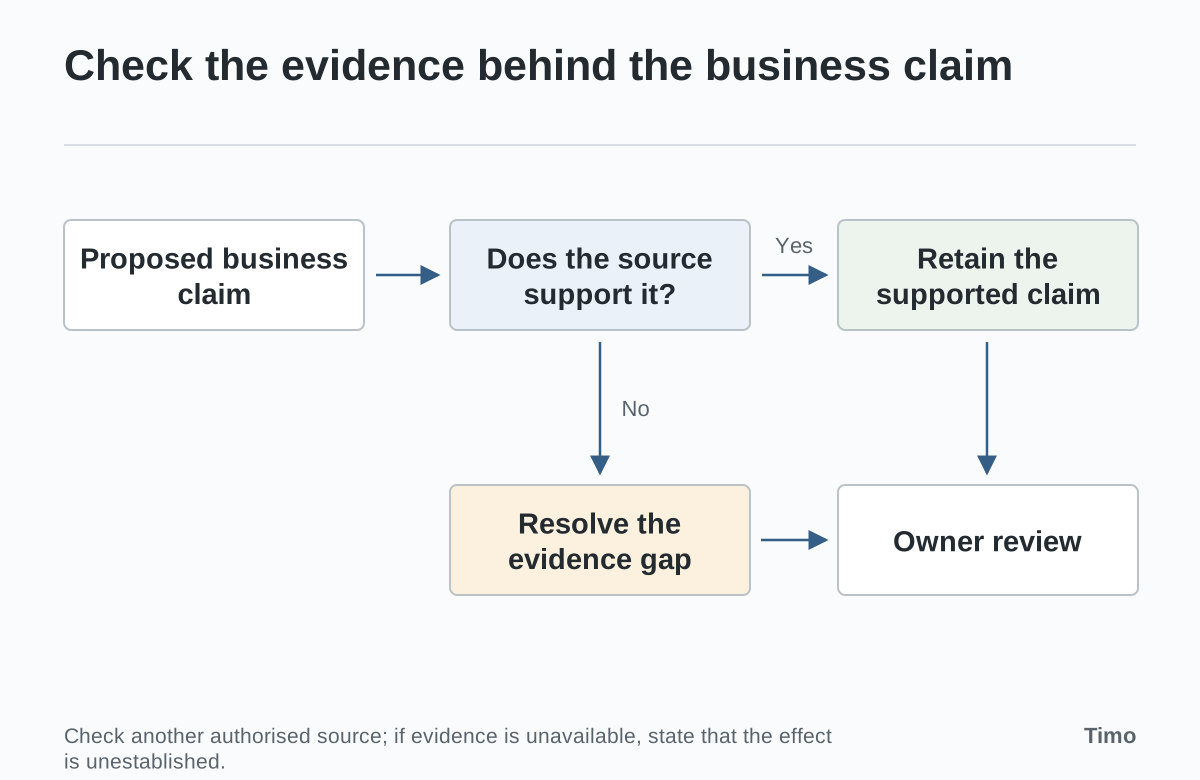
This sequence also tells you where Claude remains useful. The whole draft does not have to be discarded because one statement is wrong. You can keep supported content, correct the disputed passage, and ask for a revised brief that clearly separates established results from open questions.
Practice question 2: maintaining project knowledge
An operations team uses a Claude Project, a shared working space containing instructions and reference material, to draft weekly supplier updates. The Project contains last quarter's escalation policy. A newly approved policy changes which supplier delays must be reported to the finance director.
Several employees use the Project, and the next update has not yet been drafted. What should the workflow owner do first?
A. Upload the new policy beside the old version and tell Claude to prefer documents with the latest date.
B. Keep the shared Project unchanged, but paste the new threshold into a team prompt template for each update.
C. Update the Project instructions first and schedule the source replacement after the next reporting cycle.
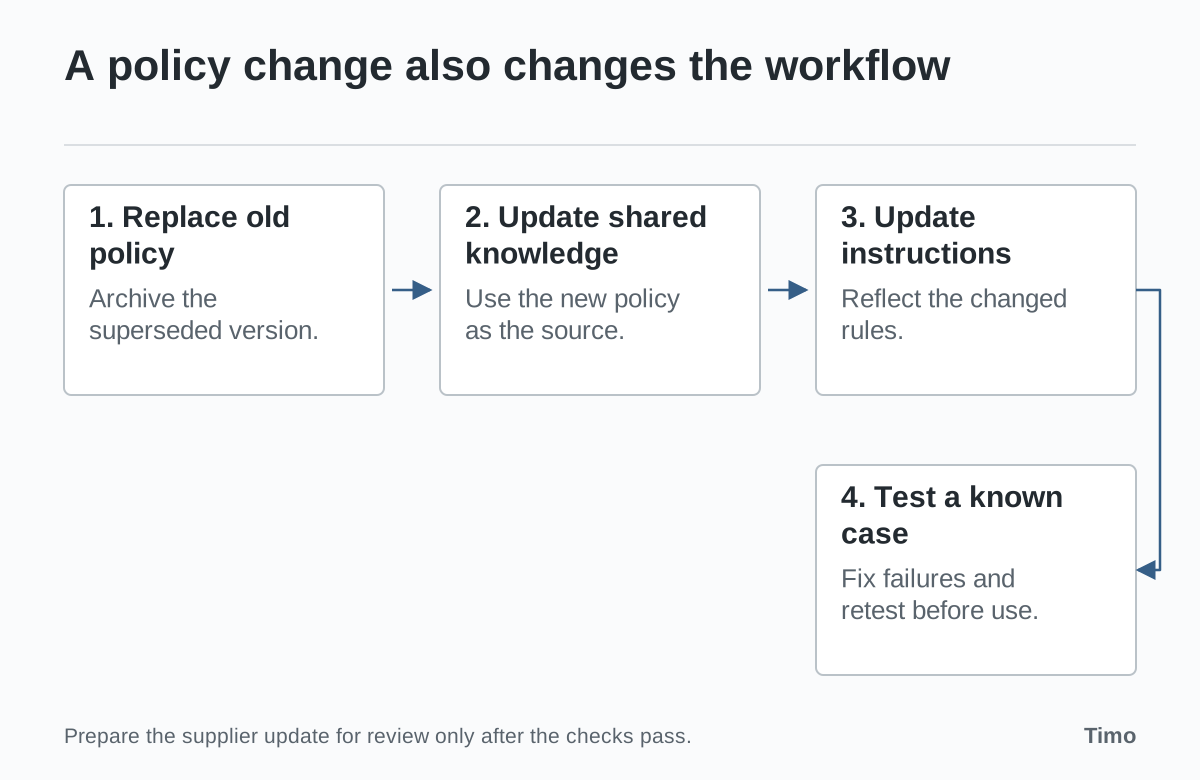
D. Upload the new policy, remove or clearly retire the superseded version, update the Project instructions, and test a known escalation case.
Best answer: D. The people using the Project need one clear answer to “Which rule applies now?” Updating the reference material and the instructions makes that answer consistent. Retiring the old version means removing it from active use or unmistakably identifying it as historical; it does not require deleting the organisation's historical policy record.
The test is the final part of the change. Select a supplier delay whose required treatment is known under the new rule, particularly one handled differently under the old rule. Draft an update using that example and check whether it identifies the correct escalation. This checks the behaviour the team will depend on, rather than merely confirming that a file was uploaded.
Why the alternatives are weaker: A assumes a document date always identifies the rule in force. A newer upload could contain historical guidance, and conflicting instructions may remain. B depends on every employee remembering to supply the override on every run. It might serve as a temporary workaround, but leaves the shared source misleading. C changes the instructions while retaining contradictory reference material for another live reporting cycle. The team has the opportunity to reconcile both before relying on the next output.
The lesson applies beyond supplier reporting. Whenever a shared AI workspace contains policies, templates, or procedures, someone must own their currency. Otherwise, an apparently repeatable workflow can repeat an outdated rule very efficiently.
Practice question 3: improving an inconsistent workflow
A communications team asks Claude to turn meeting notes into customer updates. Each employee supplies different instructions. Some updates distinguish confirmed commitments from suggestions; others present both as agreed actions. Editors also disagree about what a good update should contain. Which change is most likely to improve consistency?
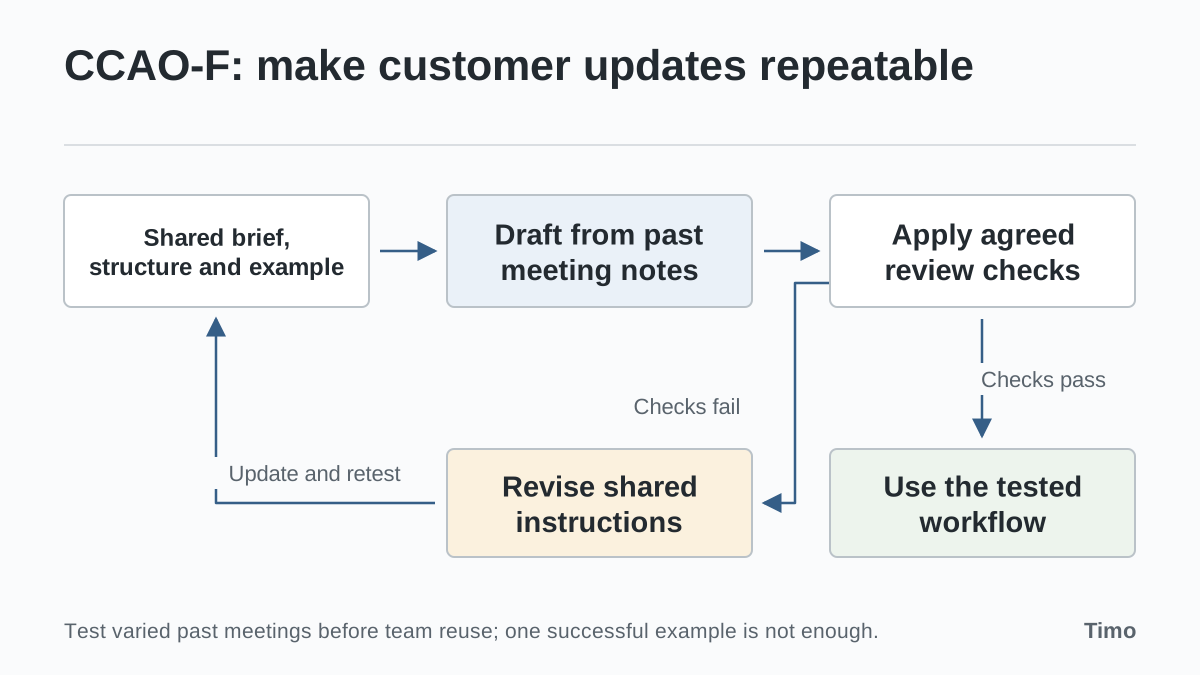
A. Create a shared task brief, a fixed output structure, an approved example, and a review checklist, then test them on several past meetings.
B. Give everyone the prompt from the update that received the best feedback last month and keep the existing informal review.
C. Let employees keep their own prompts but require one editor to rewrite every output before it is sent.
D. Standardise on one model and temperature setting while allowing each employee to define quality independently.
Best answer: A. The team first needs a common definition of the task and a common way to decide whether the result is acceptable. The brief can require the draft to use only the notes supplied. The structure can separate decisions, commitments, owners, and open questions. The approved example shows what those requirements look like in a finished update, while the checklist gives reviewers an agreed basis for accepting it.
Testing several past meetings matters because one polished example may be unusually easy. Include a meeting with an unassigned action and another with a proposal that was discussed but not approved. The workflow should preserve those distinctions. If it invents an owner or turns a proposal into a promise, the team has a specific problem to fix before reuse.
Why the alternatives are weaker: B assumes last month's successful prompt will handle different meetings and different reviewers' expectations. C may prevent some bad messages from reaching customers, but leaves one editor correcting the same upstream problems repeatedly. D controls the model and a generation setting that influences variability; it does not tell people which facts to include or what counts as an acceptable answer.
Turn each answer into a practical improvement
For each question, write the action you chose, the evidence it depends on, and the person or check that makes it dependable. Then explain the strongest rejected option. If you chose B in question 2, for example, your underlying assumption may have been that everyone would remember to paste the latest policy. That assumption identifies something worth testing in a real team workflow.
Next, build one small business example using non-sensitive or invented material. Give Claude meeting notes containing one confirmed commitment, one unapproved suggestion, and one missing owner. Ask for a customer update, review the first draft, revise your instructions, and run it again. Keep the source notes, both outputs, and a short explanation of what changed. Another person should be able to see why the revised result is more reliable.
The Claude certification readiness checklist explains how to choose further preparation resources. Use practice questions to expose gaps, then return to the current provider guide and a practical exercise to address them.
CCAO-F mock exam FAQs
Is this an official CCAO-F mock exam?
No. The questions were written independently by Timo. Anthropic has not supplied, reviewed, or endorsed them.
Are these recalled questions from the live exam?
No. These are original workplace scenarios. They do not reproduce protected, recalled, or copied exam questions.
Is CCAO-F suitable for non-developers?
The role focuses on using Claude in business and productivity workflows. The exercises here ask you to judge sources, outputs and review decisions rather than build software integrations. Check the current provider guidance for your own preparation and eligibility.
What should I do if I chose the right answer for a different reason?
Compare your reasoning with the stated constraints. A correct letter can hide an assumption that would fail in a slightly different situation. Explain why each competing option leaves part of the problem unresolved, then try the same decision with one fact changed.
Will answering all three correctly predict a pass?
No. Three questions cannot represent the full exam blueprint or official testing conditions. Use the result to decide what to practise next.
How can Timo help me prepare for CCAO-F?
Timo helps you prepare for CCAO-F by connecting Claude learning with practical business exercises and original questions with worked answers. Use the examples here to find gaps in evidence checking, policy use and output review, then practise those skills in a supplier comparison or customer update. Amotion AI, which runs Timo, is a registered member of the Claude Partner Network.
Apply for CCAO-F preparation and name the skills you want to improve. Membership is US$50 for two months; Timo reviews your profile and shares the enrollment details before payment. Current learning resources and onboarding instructions arrive by email. Anthropic sets official exam eligibility and fees and awards the credential.